• About the Authors
  • Blogs and Shows
  • Journals
  • Open Invitation
  • References
  • Resources
  • Taxonomy
  • Who’s Who?

Media Psychology

~ Informing, Educating and Influencing

Media Psychology

Tag Archives: Physiological Psychology

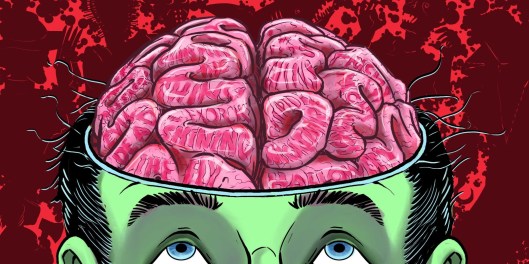
What Horror Movies Do to Your Brain

25 Wednesday Jan 2017

Posted by Donna L. Roberts, PhD in Media Effects, Media Psychology, Psychology

≈ Leave a comment

Tags

Arousal Transfer Theory, Horror Movies, Physiological Psychology

Source: http://www.psychology-spot.com/2016/04/horror-movies-affect-brain.html#.WGUGYA86d_M.facebook

When we watch a movie, we know what we are seeing isn’t real. Yet, sometimes the scenes are so realistic to keep us in suspense throughout the movie, and we seem to experience first hand the feelings of the protagonist.

The movie is a fiction, but the emotions we feel and the reactions they trigger are real. Undoubtedly, it is a very powerful effect that is now being studied in the context of a newborn science called neurocinema, dedicated to study the influence of movies on our brains.

Do you remember when was the last time you jumped on the chair while watching a horror movie? Now we will find out exactly what happened in the brain and how your body reacted.

Scenes of terror directly activate the primitive brain

Usually, watching a movie, we “unplug” the motor areas of the brain because are useless. But sometimes scenes have a strong enough impact to get us through the inhibition of the motor system to make us react.

We bounce on the chair or we cry, because the scene makes us overcome this brain block going to unleash our instincts. It means that content is so strong, under an emotionally point of view, to make us react immediately for protecting ourselves or alert others that are in danger. In fact, shouting we warn those around us, or the characters in the movie, that there is a danger and must save themselves. It is an atavistic reaction.

And all this happens in a matter of milliseconds, we have no time to process what we’re seeing or modulate our reaction. Basically, we react this way because in those few milliseconds, our brain is not aware that it’s just a movie and we’re safe.

If you think about it, this reaction is not surprising since our brain is programmed to assume that everything we see is real. Therefore, it is very difficult to communicate with the most primitive parts, which are those being activated in these cases, that what we are seeing is a fiction. As a result, the body reacts immediately.

In fact, even if isolated cases, there are people who suffered from post-traumatic stress as a result of watching a movie, a problem more common in children, for whom it is more difficult to distinguish the boundaries between reality and fantasy.

In adults, this disorder may be caused by the excessive identification with the characters. In fact, in the case of horror movies the viewer knows as little as the characters, this is why is much easier for him to identify with them. When this identification occurs, the brain may develop deep scars, almost as much as those caused by a real experience. But that’s not all.

3 changes that occur in our body when we watch a horror movie

The reaction to what we see on the screen is not limited to the brain but extends throughout the body. This because the brain sends an alarm signal activating the autonomic nervous system by increasing the production of cortisol and adrenaline, two neurotransmitters that cause some changes at the physiological level.

1. Heart rate increases. A study conducted on a group of young people revealed that watching a horror movie causes an increase of 14 beats per minute of the heart rate. It was also found a significant increase in blood pressure. In addition, researchers found an increase in white blood cells in the blood and a higher concentration of hematocrit, as if the body were to defend against an intruder.


2. You start to sweat. Skin conductance is one of the first indicators of emotional arousal. In other words, when you are afraid you sweat. Researchers at the University of Wollongong have analyzed the response of a group of people in front of violent and horror movies and noticed how those who are more empathic tend to sweat more when watching these movies, and show no signs of addiction.

3. Muscles contract. Once the primitive brain has detected a threat and given the alarm signal, it is difficult to stop it, especially if the horror scenes follow one after the other and are accompanied by a chilling soundtrack. Researchers at the University of Amsterdam found that in these movies music generates what is known as “alarm reaction”, a simultaneous response of mind and body to a sudden and unexpected stimulus that leads to contraction of the muscles of arms and legs. That’s why when watching a horror movie we always tense our muscles.

But then, why do we continue to watch horror movies?

At this point it is clear that most of us do not enjoy watching a horror movie. Yet despite all, many continue to suffer the “charm” of these obscure characters. Why?

The Arousal Transfer Theory indicates that negative feelings created by these movies intensify the positive feelings we experience when at the end the hero triumphs. Basically, we like these movies because watching them is like getting on an emotional roller coaster.

Another theory hints at the fact that horror or violent movies help us manage our own fear. In practice, these films would have a cathartic effect, helping us develop our most ancient and hidden fears.

Or maybe it could just be a morbid curiosity fostered by our innate need to keep us safe from dangers that can threaten us.

Sources:

Bos, M. et. Al. (2013) Psychophysiological Response Patterns to Affective Film Stimuli. PLoS One; 8(4).

Mian, R. et. Al. (2003) Observing a Fictitious Stressful Event: Haematological Changes, Including Circulating Leukocyte Activation. Stress: The International Journal on the Biology of Stress; 6(1): 41-47.

Barry, R. J. & Bruggemann, J. M. (2002) Eysenck’s P as a modulator of affective and electrodermal responses to violent and comic film. Personality and Individual Differences; 32(6): 1029–1048.

Invert     Jennifer Delgado Suárez

Psychologist by profession and passion, dedicated to to string words together.

Share this:

  • Click to email a link to a friend (Opens in new window) Email
  • Click to print (Opens in new window) Print
  • Click to share on Facebook (Opens in new window) Facebook
  • Click to share on LinkedIn (Opens in new window) LinkedIn
  • Click to share on Pinterest (Opens in new window) Pinterest
  • Click to share on Reddit (Opens in new window) Reddit
  • Click to share on X (Opens in new window) X
  • Click to share on Tumblr (Opens in new window) Tumblr
Like Loading...

From “The Chinwag”

14 Saturday Jan 2017

Posted by Ken S. Heller in Media Psychology, Psychology, Reaction Videos, Social Psychology

≈ 2 Comments

Tags

Bandura, Cognitive, Physiological Psychology

A short piece on reaction videos.


Share this:

  • Click to email a link to a friend (Opens in new window) Email
  • Click to print (Opens in new window) Print
  • Click to share on Facebook (Opens in new window) Facebook
  • Click to share on LinkedIn (Opens in new window) LinkedIn
  • Click to share on Pinterest (Opens in new window) Pinterest
  • Click to share on Reddit (Opens in new window) Reddit
  • Click to share on X (Opens in new window) X
  • Click to share on Tumblr (Opens in new window) Tumblr
Like Loading...
Ken Heller on

Enter your email address to follow this blog and receive notifications of new posts by email.

Join 4,624 other subscribers

Media Psychology

  • RSS - Posts
  • RSS - Comments

Blog Stats

  • 114,411 hits

Archives

  • December 2020 (3)
  • November 2020 (4)
  • September 2020 (1)
  • June 2020 (1)
  • April 2020 (1)
  • March 2020 (1)
  • February 2020 (3)
  • January 2020 (4)
  • December 2019 (8)
  • November 2019 (1)
  • October 2019 (5)
  • September 2019 (10)
  • August 2019 (7)
  • July 2019 (4)
  • June 2019 (3)
  • May 2019 (5)
  • April 2019 (8)
  • March 2019 (7)
  • February 2019 (4)
  • January 2019 (5)
  • December 2018 (4)
  • November 2018 (4)
  • October 2018 (5)
  • September 2018 (8)
  • August 2018 (7)
  • July 2018 (4)
  • June 2018 (3)
  • May 2018 (6)
  • April 2018 (4)
  • March 2018 (6)
  • February 2018 (6)
  • January 2018 (6)
  • December 2017 (4)
  • November 2017 (5)
  • October 2017 (5)
  • September 2017 (5)
  • August 2017 (5)
  • July 2017 (5)
  • June 2017 (5)
  • May 2017 (2)
  • April 2017 (2)
  • March 2017 (5)
  • February 2017 (4)
  • January 2017 (7)
  • December 2016 (3)
  • November 2016 (2)
  • October 2016 (4)
  • September 2016 (2)
  • August 2016 (2)
  • July 2016 (3)
  • June 2016 (5)
  • May 2016 (6)
  • April 2016 (4)
  • March 2016 (2)
  • February 2016 (1)
  • January 2016 (1)
  • December 2015 (1)
  • November 2015 (2)
  • January 2015 (1)
  • November 2014 (1)
  • September 2014 (1)
  • August 2014 (1)
  • July 2014 (4)
  • May 2014 (1)
  • April 2014 (1)
  • March 2014 (2)
  • February 2014 (2)
  • January 2014 (2)
  • December 2013 (4)
  • November 2013 (2)
  • October 2013 (1)
  • September 2013 (1)
  • August 2013 (4)
  • July 2013 (1)
  • June 2013 (1)
  • April 2013 (1)
  • March 2013 (4)
  • February 2013 (3)
  • January 2013 (5)
  • December 2012 (4)
  • November 2012 (6)

Addiction Advertising Agenda Setting Al-Jazeera Associated Press Behavioralism Bernays Cartoons Causality Cognitive Correlation Cultivation Theory Digital Immigrants Digital Natives Ellul Facebook Fallacious Arguments Film Framing Gaming Gerbner Giles Google Greenwald ICT Identity Imagery Impact of ICT Influence Ingress Internet Internet.org Journalism Marketing McCombs McLuhan Mean World Sydrome Media Media Effects Media Literacy Media Psychology Mobile Computing Mobile Phones Moscow Olympics Neural Pathways news coverage Operant Conditioning Persuasive Technology Physiological Psychology Pinterest Potter Prensky Privacy Propaganda Psychological Effects Psychological Operations Psychology Public Diplomacy Public Relations Quotes Sexism Skinner Smartphone Social Change Social Identity Social Media Social Networks Social Psychology Sports Taylor Technology The Engineering of Consent Transmedia Twitter Walking Dead

RSS The Amplifier – APA Div. 46 Newsletter

  • The Legend of Zelda: Echoes of Wisdom as a Feminist Breakthrough and Contradiction
  • Digital Mourning: Grief Expression on Social Media
  • Book Review: Black Film Through a Psychodynamic Lens
  • The History of (Media) Multitasking Research
  • AI and Mental Health: Can Chatbots and Digital Coaches Bridge the Gap for Perinatal Mental Health Support?
  • To Infinity and Beyond: Best Practices for Data-informed Telemental Intensive Outpatient Programs
  • Editor’s Column: Authentically Inclusive Representation in Film and Television
  • President’s Column: Charting the Future of Media Psychology: Division 46 at APA 2025
  • Past President’s Column: Division 46 Announcements
  • TikTok and Self-Diagnosis: What Clinicians Need to Know

RSS APA Div. 46 Media Psychology and Technology Facebook Feed – Come check it out!

  • Kids Are Using Minecraft To Design A More Sustainable World
  • Home – UsMeU
  • Huggable Robot Befriends Girl in Hospital
  • Lifelong learning is made possible by recycling of histones, study says
  • Synthetic Love: Can a Human Fall in Love With a Robot? –
  • Today’s Photo:
  • Dr. Joanne Broder Sumerson
  • Could Storytelling Be the Secret Sauce to STEM Education?
  • Google driverless cars were in 11 accidents, but officer, it wasn’t their fault
  • All-But-Dissertation Survival Guide

RSS Changing Minds

  • An error has occurred; the feed is probably down. Try again later.

RSS Media Smarts

  • Outcome Chart – Newfoundland and Labrador – Science K
  • Outcome Chart – Newfoundland and Labrador – Mathematics 3202
  • Outcome Chart - Newfoundland and Labrador - Mathematics 2202
  • Resources for Teachers - Video Media
  • Resources for Parents - Video Media
  • Resources for Teachers - Comics
  • Resources for Parents - Comics
  • The comics industry
  • Expression and storytelling in comics
  • Resources for Teachers - Visual Media

RSS Adam Curtis

  • HYPERNORMALISATION
  • TRAILER TRASH
  • HAPPIDROME - Part One
  • THE VEGETABLES OF TRUTH
  • NOW THEN
  • SUSPICIOUS MINDS
  • ONE'S PRIVATE LIFE
  • WHAT THE FLUCK!
  • THE BABY AND THE BAATH WATER
  • BUGGER

RSS Media Psychology Blog

  • does resurge work : Resurge weight reduction supplement is a...

RSS The Psych Files

  • The Psych Files – Most Popular Episodes
  • Psych Files Episodes on Youtube

RSS The Media Zone

  • And He Knew All the Words
  • Sexy, Dangerous Women Are Everywhere
  • In Praise of Older Women
  • "Commercial Creep"—I Hate Commercials and You Should Too
  • How A Laundry Detergent Commercial Saved the World
  • Jodie Foster: To Come Out Lesbian Or Let Sleeping Rumors Lie
  • Why No Photos of the Slaughtered Newtown Children?
  • HBO's "The Newsroom": Sorkin Talks Truth To Stupid
  • Dorothy Sandusky: A Woman Who Saw Nothing
  • Celebrity - The Incest of Actors, Politicians, and Journalists.

RSS The Media Psychology Effect

  • The Importance of Synesthesia in Artificial Intelligence
  • Media and Communications Psychology in the 21st Century
  • Media Psychology Is a New-Collar Profession
  • The Psychology of Crowds
  • AI Is Reshaping Workers as Well as Work
  • Understanding the Eye in AI
  • Where's Smokey the Bear When You Need Him?
  • Personalized AI and the Future of Teaching and Learning
  • The Future of Learning and Education Is Already in Your Pocket
  • Psychology and the Importance of Perfect Practice

RSS On The Media

  • An error has occurred; the feed is probably down. Try again later.

Blog at WordPress.com.

Privacy & Cookies: This site uses cookies. By continuing to use this website, you agree to their use.
To find out more, including how to control cookies, see here: Cookie Policy
  • Subscribe Subscribed
    • Media Psychology
    • Join 555 other subscribers
    • Already have a WordPress.com account? Log in now.
    • Media Psychology
    • Subscribe Subscribed
    • Sign up
    • Log in
    • Report this content
    • View site in Reader
    • Manage subscriptions
    • Collapse this bar
%d